BALI — The ISCB-AI 2026 international conference was held over four days, August 21–24, at the Tsinghua Southeast Asia Center and Awan Auditorium in Bali. Organized by the International Society for Computational Biology (iscbAI’26) together with ISCB-China, the event brought together hundreds of researchers from around the world to discuss recent developments in artificial intelligence (AI) applied to computational biology and biomedicine. The event began on August 21 with participant registration and poster preparation, followed by a social hour in the afternoon.
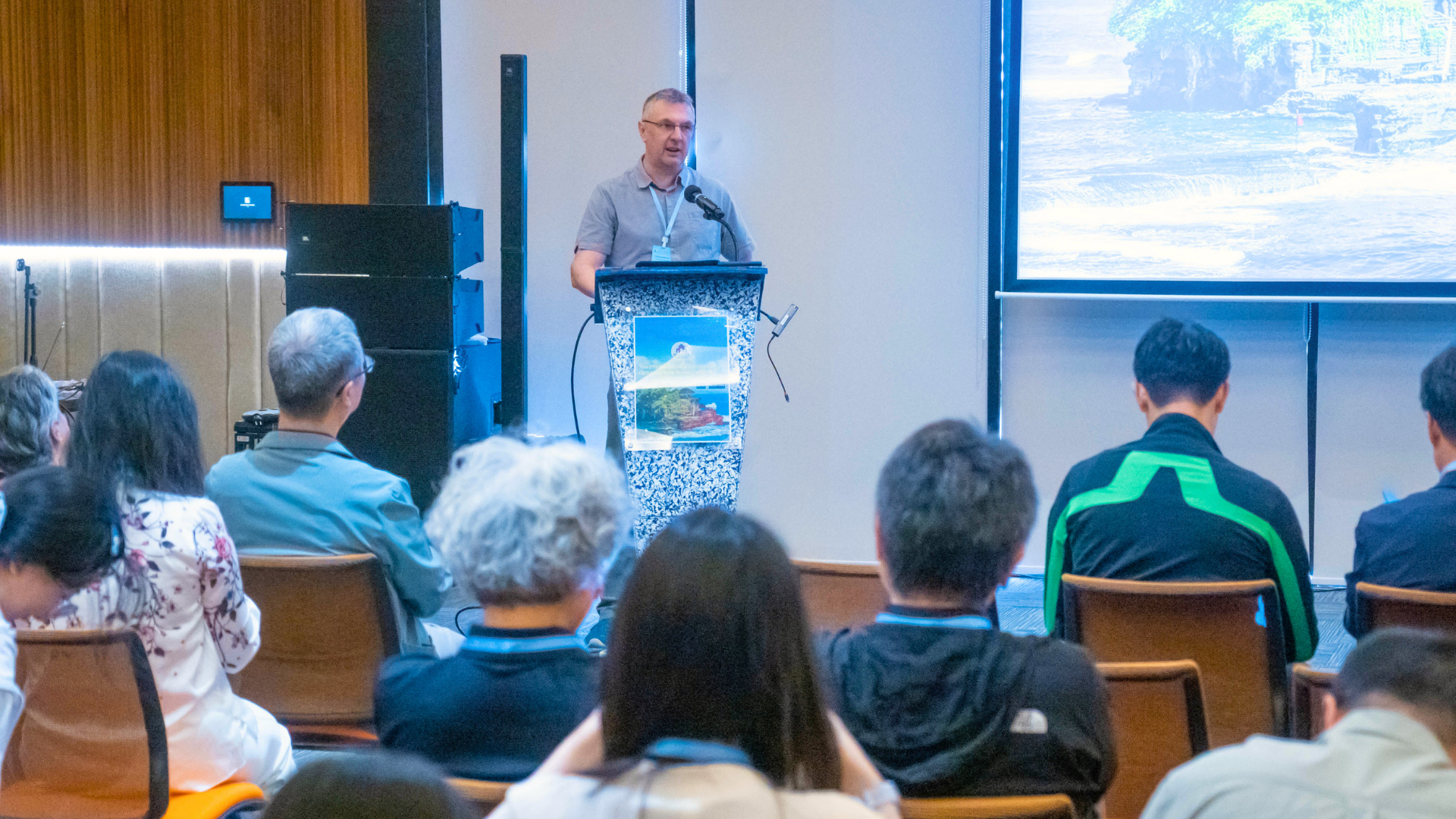
The official opening took place on August 22 at the Awan Auditorium, chaired by Xuegong Zhang, Chair of ISCB-China, Vice President of ISCB, and a professor at Tsinghua University. Opening remarks were delivered by Predrag Radivojac, President of ISCB and a professor at Northeastern University. The first keynote was delivered by Karin Verspoor, Executive Dean of the School of Computing Technologies at RMIT University, titled “AI co-scientists: the evolving role of Artificial Intelligence tools in science.” This was followed by invited talks from In-Kyung Jeong and Seongho Ryu, both of the Korea Society of Bioinformatics.
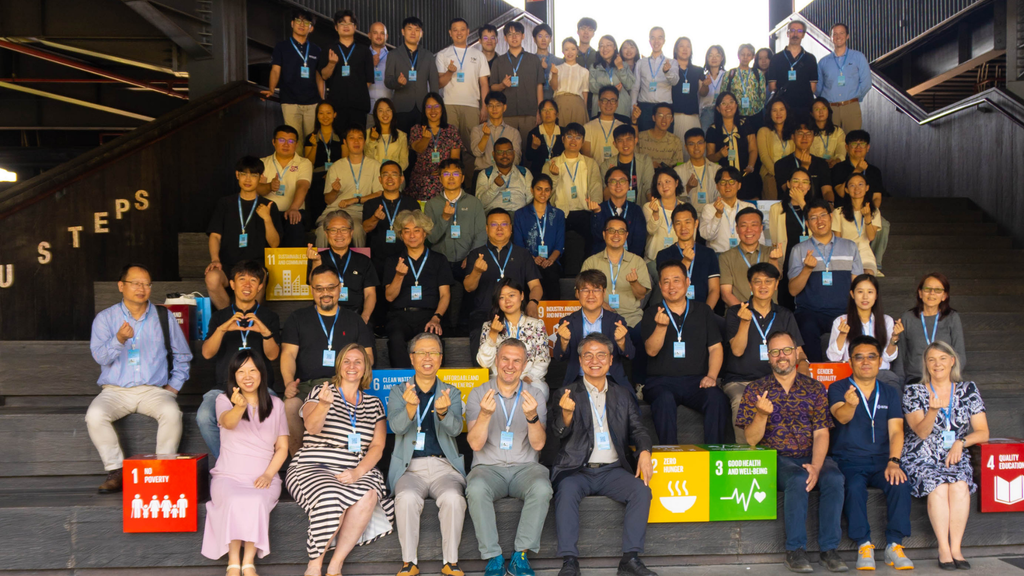
After a group photo session, the conference moved into Session 1, Single-Cell & Spatial Multi-Omics Integration, featuring research including a scalable sample-demultiplexing method (HT-Demux) presented by Xinzhu Jiang and the CellSTIC framework by Yungang Xu for analyzing cell-cell communication in spatial data. In the afternoon, Session 2, Single-Cell Modeling & Perturbation Analysis, was chaired by Ning Shen of Zhejiang University, followed by a panel discussion led by Hyerin Kim of the Korea Research Institute of Bioscience and Biotechnology (KRIBB). Day two concluded with a welcome dinner for all attendees.
On August 23, the conference opened with a keynote by Xing-Ming Zhao, a professor at Fudan University, on data- and AI-driven exploration of the human gut microbiome. This was followed by an invited talk from Tiannan Guo of Westlake University on spatiotemporal proteomics for building virtual cell models. The day’s program included Session 3, Sequence Modeling: from DNA to RNA, and Session 4, Protein Structure, Interaction & Molecular Design. One presentation that highlighted the limitations of popular AI models came from Henry Childs of Duke University, who discussed AlphaFold 3’s failure to correctly predict D-peptide chirality. Day three closed with a Poster Flash Talk session lasting nearly two hours, featuring around 19 short presentations from researchers at various institutions, including the Beijing Institute of Genomics and the University of São Paulo.
The final day, August 24, featured Session 5, Multi-Omics Integration, Disease Prediction & Biomedical Reasoning, and Session 6, Fitness and Cross-Species. Topics covered included AI-based biomedical reasoning systems, drug response prediction, and deep learning-based inference of archaic introgression. The conference officially closed at 2:30 p.m., led by Xuegong Zhang, followed by a final poster and exhibition session before attendees returned to their hotels.